
TL;DR
A DJ set typically involves selecting, mixing, and manipulating pre-recorded tracks in real time, while a live set involves performing or creating more elements of the music live using equipment such as synthesizers, drum machines, sequencers, controllers, instruments, or vocals. The exact setup varies by artist, and some performances combine elements of both.
If you’ve ever looked at a nightclub or festival lineup and seen an artist listed as performing a “DJ set” or “live set,” that label gives you an idea of what kind of performance to expect.
But the difference isn’t simply about how much equipment is on stage.
Here’s how DJ sets and live sets actually differ.
What Is a DJ Set?
A DJ set is a performance built primarily around selecting, mixing, and manipulating pre-recorded music.
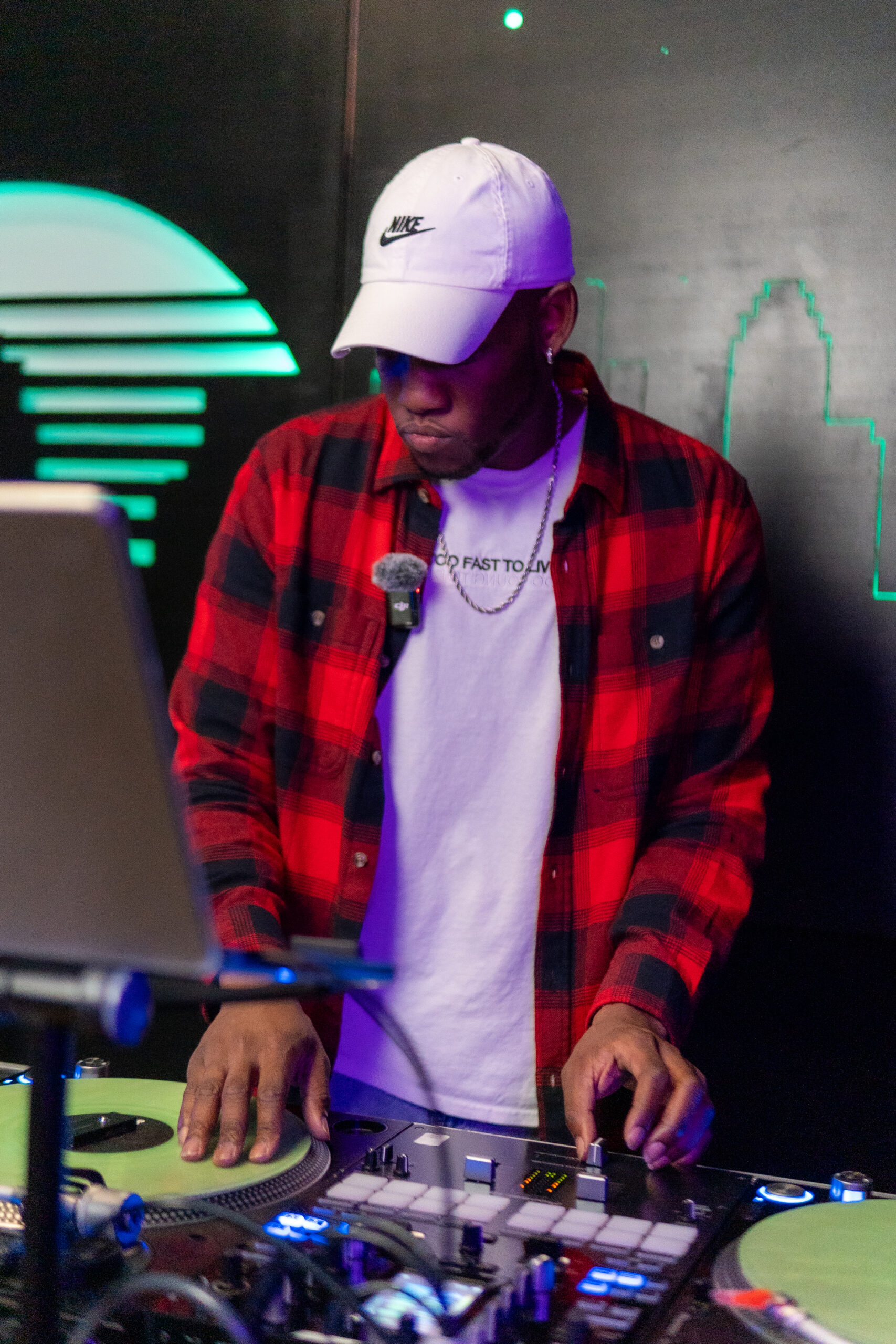
Depending on their setup and style, a DJ may use decks, CDJs, controllers, a mixer, software, or a combination of equipment to move between tracks and shape the flow of the set.
But DJing is more than pressing play on pre-recorded songs.
During a DJ set, the performer may be:
- Selecting tracks
- Beatmatching
- Mixing transitions
- Adjusting EQ
- Using loops and effects
- Setting and triggering cue points
- Changing the energy or direction of the set
- Responding to the crowd
A DJ can also play their own original music during a DJ set. The fact that the music was created by the person performing doesn’t automatically make the performance a live set.
The distinction is more about how the music is being performed during the set.
What Is a Live Set?
A live set involves performing, creating, arranging, or manipulating more elements of the music live rather than primarily mixing completed tracks together.
There isn’t one piece of equipment that automatically turns a performance into a live set.
Depending on the artist, a live electronic setup could involve:
- Synthesizers
- Drum machines
- Sequencers
- MIDI controllers
- Samplers
- Keyboards
- Live instruments
- Vocals
- Effects and other hardware or software
One artist might perform completely alone with electronic hardware, while another may incorporate singers or musicians.
Because live setups vary so much from artist to artist, the term “live set” describes the performance approach more than one specific collection of equipment.
DJ Set vs. Live Set: Quick Comparison
| DJ Set | Live Set |
| Primarily works with pre-recorded tracks | More musical elements are performed, created, or manipulated live |
| Focuses heavily on track selection, mixing, transitions, and crowd response | Focuses heavily on live performance, arrangement, and manipulation |
| Commonly uses decks, CDJs, controllers, software, and a mixer | May use synths, drum machines, sequencers, controllers, instruments, vocals, and other tools |
| Can include the DJ’s original music | Can include original music |
| Setup is often more streamlined | Setup can be more complex depending on the performer |
| Can incorporate live elements | Can incorporate DJ-style mixing |
The simplest way to think about it: a DJ set primarily mixes finished tracks, while a live set involves performing more of the music’s individual elements in real time.
Can a Performance Be Both a DJ Set and a Live Set?
Yes.
The line between a DJ set and a live set isn’t always perfectly defined.
Some DJs incorporate drum machines, samples, live vocals, instruments, or other performance elements into an otherwise traditional DJ set.
Likewise, an electronic artist performing live may incorporate pre-recorded tracks or DJ-style mixing into parts of their performance.
These hybrid performances can fall somewhere between the two.
That’s why looking at the artist’s actual setup and performance style often tells you more than the label alone.
Does the Venue Change the Type of Set?
A DJ set or live set can happen in many different environments, including nightclubs, festivals, private events, and tours.
The venue itself doesn’t determine whether the performance is a DJ set or a live set.
However, the environment can influence how an artist prepares and performs.
Nightclub Sets
In a nightclub, DJs often need to think carefully about the room, crowd, set time, and the DJs performing before and after them.
Reading the crowd and controlling the energy throughout the set can become especially important.
Festival Sets
Festival performances may involve different stage setups, audiences, schedules, and technical requirements.
Depending on the artist and event, a festival performance could be a traditional DJ set, a live electronic performance, or a combination of both.
Tour Sets
Artists touring their own show may have a more consistent performance setup from one date to another, although the equipment and format still depend entirely on the artist and production.
The important distinction is that nightclub, festival, and tour describe the performance environment-not whether the artist is automatically performing a DJ set or live set.
How Do You Practice for a DJ Set?
Understanding what a DJ set is and performing one confidently are two very different things.
Practicing a full set can help DJs work on:
- Transitions
- Beatmatching
- Track selection
- Cue points
- Effects
- Set flow
- Energy changes
- Recovering from mistakes
Instead of only practicing individual transitions, try performing a complete set from beginning to end.
Then listen back to it.
You may notice awkward transitions, sudden changes in energy, tracks that don’t work together as expected, or moments where the set flows particularly well.
Those are difficult things to identify if you only practice one transition at a time.
DJ PRACTICE TIP
Don’t only practice the transitions you already know you can do. Spend time on the parts of your set that make you uncomfortable. A mistake during practice gives you an opportunity to figure out how you’ll recover if something similar happens during a real performance.
What About Practicing a Live or Hybrid Set?
A live or hybrid performance may require a different type of preparation.
Instead of only thinking about track selection and transitions, you may also need to coordinate:
- Multiple pieces of equipment
- Instruments
- Samples
- MIDI or other controllers
- Vocals
- Effects
- Timing between different performance elements
The more moving pieces your setup has, the more important it becomes to rehearse the entire performance, not just the individual parts.
You want to know how everything works together before you’re performing in front of an audience.
Learning to DJ From Scratch at Band Barracks
For beginners, terms like beatmatching, cue points, EQ, transitions, and set flow can sound complicated until you actually get behind the decks.
That’s something we’ve explored directly at Band Barracks.
Band Barracks DJ ambassador Bruce Waine, an experienced Houston DJ who also offers DJ lessons, has worked with Band Barracks engineer Alek on learning to DJ from scratch.
The process gives beginners a look at what learning to DJ actually involves-from understanding the equipment to developing the skills needed to put tracks together into a set.
Band Barracks YouTube episode featuring Bruce Waine teaching Alek how to DJ.
This is also a useful reminder that becoming comfortable behind the decks takes practice. Understanding what the controls do is one thing. Developing the timing, decision-making, and confidence to perform a complete set takes repetition.
DJs Don’t Only Use Practice Rooms Before a Gig
A DJ room doesn’t necessarily have to be used only when you have a performance coming up.
At Band Barracks, we’ve seen DJs use the rooms for different parts of their creative process, including practicing sets and creating DJ content.
Some DJs use their sessions to work through new ideas and transitions. Others record or create social content around their DJing.
The common thread is having a dedicated environment where the focus is on the set.
Whether you’re preparing for an upcoming performance or simply trying to become more comfortable behind the decks, consistent practice gives you room to experiment before there’s an audience watching.
DJ Set or Live Set: Which One Is Right for You?
You don’t need to choose a live set simply because it sounds more advanced.
And performing a DJ set doesn’t make the performance less creative.
They’re different approaches.
If you enjoy:
- Discovering and selecting music
- Building transitions
- Reading crowds
- Shaping energy across a set
a traditional DJ set may fit naturally.
If you want to:
- Perform more musical elements yourself
- Incorporate hardware or instruments
- Manipulate individual elements of your music live
- Build a more performance-oriented electronic setup
you may eventually explore a live or hybrid set.
And plenty of artists move between these approaches throughout their careers.
What matters is developing a performance that fits your music, skills, and creative goals.
Ready to Practice Your DJ Set?
Reading about DJ sets is useful.
Getting behind the decks is where the real learning happens.
Band Barracks offers DJ practice rooms in Houston where DJs can work on transitions, practice complete sets, experiment with ideas, and prepare for upcoming performances.
Book a DJ Practice Room
Want to See the DJ Rooms First?
If you want to check out the Band Barracks DJ spaces before booking your first session, come see the facility in person.
Schedule a Studio Tour
Frequently Asked Questions
What’s the main difference between a DJ set and a live set?
A DJ set primarily involves selecting, mixing, and manipulating pre-recorded tracks. A live set involves performing or manipulating more individual musical elements in real time using instruments, hardware, software, vocals, or a combination of tools.
Does a DJ set mean the DJ isn’t performing live?
No. A DJ is still making real-time decisions during a DJ set, including track selection, transitions, EQ adjustments, effects, loops, and responding to the crowd. “DJ set” describes the format of the performance rather than suggesting the performer isn’t actively performing.
Can DJs play their own music during a DJ set?
Yes. DJs can include their own original tracks in a DJ set alongside music from other artists. Playing original music doesn’t automatically make the performance a live set.
Can a DJ set include live instruments?
Yes. Some performances combine traditional DJing with live instruments, vocals, drum machines, samples, or other elements. These are sometimes described as hybrid sets depending on the artist and setup.
Is a festival set always a live set?
No. Artists at festivals may perform DJ sets, live sets, or hybrid performances. The venue or event type doesn’t determine the performance format.
Is a live set better than a DJ set?
Neither format is inherently better. They require different skills and offer different creative possibilities. The right format depends on the artist’s music, performance style, technical setup, and goals.