
TL;DR
A home studio makes sense when your space, equipment, and workflow already give your project what it needs. A professional recording studio becomes useful when noise, lack of space, distractions, equipment needs, collaboration, or technical support are limiting what you can do at home.
You don’t necessarily have to choose one permanently. For many projects, you can do some of the work at home and use a professional studio only when it solves a specific problem.
If you can record at home, when does booking a professional recording studio actually make sense?
It depends less on which option is supposedly “better” and more on what your project needs.
Your home setup may already be perfect for writing, producing, editing, experimenting, or even recording finished material.
But if your current setup starts limiting what you can do, a professional studio can give you access to a different environment, more space, equipment, a dedicated place to work, or technical support.
The real decision is:
What is your current setup preventing you from doing, and would a professional recording studio solve that problem?
What’s the Difference Between a Home Studio and a Professional Recording Studio?
A home studio can be anything from a laptop, interface, microphone, and headphones in a bedroom to a more advanced dedicated setup.
Its biggest advantage is access. If the setup is yours, you can work when you want, experiment without watching the clock, and build the space around your own creative process.
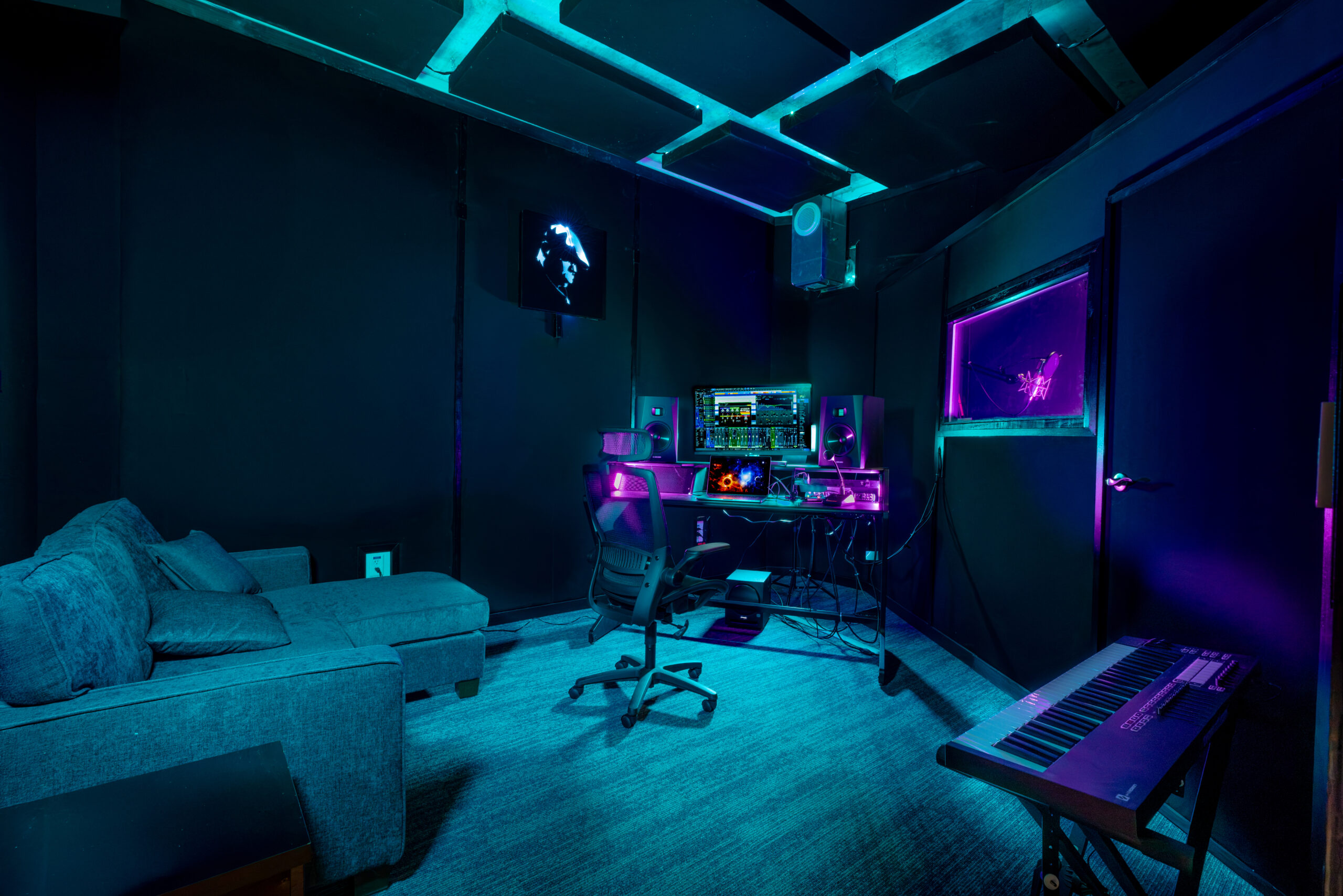
A professional recording studio gives you a dedicated environment for recording and production work.
But using one does not necessarily mean hiring an engineer.
At Band Barracks, recording rooms can be booked for independent sessions. Engineer-assisted recording is also available for artists who want technical help.
So the decision isn’t simply:
Record by yourself at home vs. pay someone else to record you.
You may already know how to run your session and simply need a different place to do the work.
| Factor | Home Studio | Professional Recording Studio |
| Access | Work whenever your setup is available | Requires booked studio time |
| Recording environment | Depends on your home space | Dedicated, sound-treated recording space |
| Equipment | What you own or purchase | Access to the studio’s available setup |
| Space & collaboration | Depends on the room available at home | Dedicated space for sessions with others |
| Focus | Convenience of working from home | Separate place dedicated to the session |
| Technical help | Usually handled yourself | May be available depending on the studio |
When Does Recording at Home Make Sense?
Recording at home can make a lot of sense.
If you already have the equipment you need and your room works for what you’re doing, there may be no reason to move every stage of your project into a professional studio.
Home recording can work especially well for:
- Songwriting
- Beat making and production
- Arranging
- Editing
- Experimenting with ideas
- Creating demos
- Projects that work well with your existing setup
One of the biggest advantages is flexibility.
You can open a project when inspiration hits, experiment without thinking about booked studio time, stop when you want, and return to it later.
Home recording is especially useful when that flexibility matters more than having a dedicated recording environment.
If your space and equipment already handle what the project needs, home may be exactly where the work should happen.
When Is a Professional Recording Studio Worth It?
A professional studio starts making more sense when your home setup creates a limitation you don’t want or need to solve at home.
Noise at Home Is Getting in the Way
Noise is one limitation Band Barracks customers have mentioned about recording at home.
Even with capable equipment, neighbors, traffic, other people in the house, or everyday background noise can interrupt a session.
If your home is already quiet enough for what you’re recording, this may not be a problem.
But when you’re repeatedly planning sessions around outside noise, a dedicated recording space can make the process easier.
You Need a Dedicated Place to Focus
Sometimes the limitation isn’t your equipment.
It’s your environment.
Band Barracks customers have described the studios as a place where they can focus and get work done.
For some creators, physically going somewhere dedicated to recording or production creates a clearer separation between everyday life and the work in front of them.
That can be valuable even when the equipment at home is already capable of doing the job.
You Need More Space
A home setup may work perfectly well for one person working at a computer.
The requirements can change when another artist, instruments, a producer, or a more involved recording setup enters the session.
A professional recording studio gives the project dedicated space without requiring you to redesign your home around occasional recording needs.
Building the Setup You Need Requires More Investment
Recording at home isn’t automatically free.
If you already own everything your project needs, your ongoing costs can be low.
But building or upgrading a home studio can require a significant equipment investment.
That doesn’t mean booking a professional studio is always cheaper.
The better question is:
Do you need to own this capability, or do you only need access to it for certain projects?
If you use something constantly, buying it may make sense.
If you only need a particular recording environment or setup occasionally, studio access may be more practical.
For a deeper look at studio pricing:
Read: How Much Does a Recording Studio Cost?
You Need a Place to Work With Other People
Your available space becomes more important when the session involves other people.
Working with another artist, producer, engineer, or client at home can be completely workable if you have the space.
When you don’t, a dedicated studio gives everyone a place to meet and work around the session.
You Want Technical Help
You may also reach a point where you don’t want to manage every technical part of the recording yourself.
A professional studio may give you the option of working with an engineer so you can focus more attention on the performance while someone else assists with recording.
At Band Barracks, that support is optional.
You can book a recording room and handle the session yourself or choose an engineer-assisted recording session when you want technical help.
What If You’re Already a Producer or Recording Engineer?
Knowing how to record doesn’t eliminate the reasons to use a professional studio.
You may already have your own computer, software, technical knowledge, and preferred way of running a session.
The missing piece may simply be a place to do the work.
Some producers and engineers bring their own clients to Band Barracks and run the recording process themselves.
They don’t necessarily need another engineer. They need a dedicated place where they can conduct the session with their client.
That’s an important distinction:
Needing a professional recording space and needing a recording engineer are two different decisions.
Do You Have to Choose Between a Home Studio and a Professional Studio?
No.
For many artists, the most practical workflow can involve both.
You might write, produce, edit, or make demos at home, then book a studio for the parts that benefit from a dedicated recording environment, more space, a different setup, or technical support.
Afterward, you can continue working at home if that suits your process.
Instead of asking only:
Home studio or professional studio?
A better question may be:
Which parts of this project make sense to do at home, and which parts would benefit from a dedicated studio?
Which Is Right for Your Project?
The simplest way to decide is to look at what your current setup allows you to do-and where it starts getting in the way.
Choose a Home Studio When:
- Your current space works for what you’re recording
- You already own the equipment you need
- You want maximum flexibility for experimenting and working on ideas
- You’re mainly writing, producing, arranging, editing, or making demos
- You prefer working independently at home
- Noise and distractions aren’t interfering with the work
Choose a Professional Recording Studio When:
- Noise at home is making recording difficult
- You need a dedicated place to focus
- Your project needs more space
- You need access to a setup you don’t own
- You need a place to work with other people
- You want technical assistance
- Your current environment is limiting the work
Consider Using Both When:
Your home setup handles much of the project well, but there are specific parts where a dedicated studio solves a problem.
You don’t have to abandon home recording to benefit from a professional studio.
Use each environment where it makes the most sense for the work you’re doing.
Frequently Asked Questions
Can you make professional-quality music in a home studio?
Yes.
A capable home setup can work very well for many kinds of recording and production.
The more useful question is whether your particular room, equipment, and working environment can handle what your project requires.
Do you need an engineer to use a professional recording studio?
Not necessarily.
At Band Barracks, customers can book recording rooms for independent sessions.
Engineer-assisted recording is also available when technical help is wanted.
Should you record vocals at home or in a studio?
It depends on your home recording environment and what you need from the session.
If your home setup gives you a quiet, workable place to record vocals, it may be enough.
If noise, the room, equipment, or distractions are creating problems, using a dedicated recording studio may make more sense.
Need a Place to Record in Houston?
If a dedicated recording environment makes sense for your project, explore the available Band Barracks recording rooms in Houston.
Want to see the spaces first?